“Barbaric homicidal maniacs, the whites, they ran this country since we were shackled and now, they’re out there killing everyone.” Clergyman Nash shuffled his shoulders while gripping his arms tight, determined to make his point through angry gyrations.
“White people are sick. A genetic viral infection. It’s not their fault. Not all of them anyway. Why do we have to hurt each other even more, even during dark times, by dividing ourselves over race?” Pastor Emerson had seen enough at his age to know the sentiment didn’t really matter or shared amongst his brethren. “We have to stick together even if brothers and sisters from another mother are afflicted. Now more than ever.” The others were digging through a busted vending machine to even listen. Emerson threw up his hands. The church and its surviving members were starving. The city itself was on fire with whites going on killing sprees. 15th Street, where he used to roam as a kid, was covered in blood and viscera. He saw his old friends from the block, grown up and beaten down by turmoil, lost to their own fears and hunger. “The plight of the white man has become the plight of the black man and all other colors. Society has collapsed. We are strongest together.”
Tommy Nash was always bold in his stance against the powers that be. His self-induced stress had turned him pudgy and bald. “Man, I’ve heard of family members killing family members. Imagine if the disease started effecting non-whites. And I’ve seen it up close. A big guy at Mercy Grocery started foaming at the mouth. He had red marks all over his neck and arms but he tried to hide it because he was afraid to be taken in by the FDC. Medical cops and crap. I was just there for some oranges. Next thing I know I’m being questioned by the police because the big white dude went ape-shit, choking people, pulling out the hair of the nice clerk. I don’t call that a virus. I call that some moral karma.”
Emerson concealed his frustration but it came as a sigh. “We have to get our people fed. That’s my only concern. It’s bad enough people of color have to hide out in homeless shelters, churches, and schools. But at least they’re not attacking us.” The white rage caused blood sacs to fill in the intestines which would burst if enflamed. This would release the virus’ DNA into the victim’s bloodstream and eventually into the brain. The blood they coughed up was grotesque but at least it only infected people with white pigment, likely through some biological means that he didn’t even want to comprehend.
“I thought white cops were bad but now they’re all consumed by anger.” Said Nash.
Emerson shared this unnatural fear of white people but couldn’t find any reason not to. He had seen the results of trusting them, bringing them into the roving communities of struggling civilians but they would often pose a threat to the group. A family of four had joined them in the shelter. The father eventually became ill and refused to leave or quarantine saying he just had a cold. A fight ensued where the white man proclaimed that he was being persecuted for his skin color. The others laughed and tried to drag him out by the arms while his son and wife begged him to stop. The whole thing became a nightmare when the men threw him out the front steps. His family came to his rescue but he had started to turn violently ill. He choked and spat flood onto his son while pulling out the hair of his wife, growling obscenities about wanting to murder and killing their own child. It was horrific and went against everything God taught him about caring for his neighbors. That look of despair on his wife’s face stuck with Emerson, that look of knowing that at one time he was a good and honest man, a good family man, was too much for him to hear. They left the family there on the streets. Even now he wanted to go back outside but they were probably gone. He bit his lip and clutched his cross pendant.
A woman came barreling through the double doors of the basement. She glanced around the room and found who she was looking for. That same desperate expression. “Pastor, they’re at the door. I can’t…I can’t.”
It was Jeanette. She had kids of her own and seemed to more compassionate towards other families caught in the white rage pandemic. “Who?”
Once she was closer it was obvious, she was shaking. “Whites. I don’t want to open the door. Their screams…I think they’re hurt.”
Emerson rubbed her shoulder and gave Nash a glance of urgency, nodding. He didn’t say another word, not even words of comfort which in turn made him uncomfortable. All he could manage was: “Stay inside.”
The pastor and his friend of thirty years walked up the stairs with their head bent. “You know what has to be done. They won’t go away. They’ll keep banging the doors and scaring the kids.” Said Nash. “You think they’d let you in if the roles were reversed?”
“Don’t strain the situation. God accepts all.”
His friend opened a side closet where he kept most of his things. “God helps those who help themselves.” And grabbed a narrow object covered in a blanket. “You have to make a choice. Either you’re going to protect us or you’re not.
The main door to the church was pounding with the fists of the meek, desperate for shelter. “I think you misinterpret God’s word. We cannot accept this defeatist attitude.”
They came to the door and motioned to the two men standing guard to step away. The pastor could hear pleas to let them in. He could tell it was a woman with several other kids, likely teens, moaning out in pain and sorrow, saying that they’re alone and afraid.
“It’s a riot out there.” It was Charles, his eyes heavy having to listen to the chaos in the streets. “It’s like the end of the world.”
“We have plenty of beds.” Said Emerson.
Nash grabbed his shoulder. “But not enough food. Listen…I remember when one of my coworkers, his name was Joe, big and bald like me, he told me that as a black man I was more likely to get shot by a black man than a white man. He was basing his beliefs on statistics, giving me some kind of number about murder rates. But then I thought about it some more and realized that he was living in a delusion. I did my own research.”
“Enough.” Emerson, being an honorable pastor, having brought in more followers before the white rage than any other clergyman or clergywoman, put his hands on the door, shouldering the door from Nash, who was removing the blanket from the shotgun.
“No, I’m serious. I discovered –listen.” The man bolstered his words with attitude. “I discovered that most murder victims are killed by someone they know so why would it be strange that a black man would be killed by another black man? Now it’s only more obvious that whites kill as many whites. People see what they want to see.”
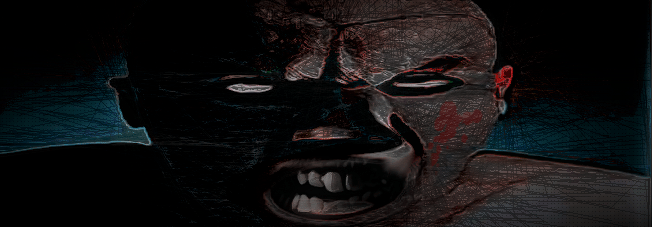
In that moment Emerson saw through Nash and witnessed another vision of his face filled with red sores and a cruel and hateful grimace. He didn’t want to be on either side of the door. It was about race. These dark hours were about terrible possibilities. The devil that he knew was telling him that there was no other choice. He grabbed the shotgun from Nash’s arms and quickly unbolted the door, swinging the gun outward. “Get back, everybody back!”
The world was a scary place and he saw it all of their eyes as he forced the family down from the steps. Why was it always a family? The teen daughter and son shook when they saw the gun, backing away with disbelieve. The father was holding the mother in his left arm. She was injured but Emerson didn’t have time to examine her closer. “Please, please!” Shouted the girl.
“I said back. You can’t come in. You don’t belong here.” Emerson felt the decades of repression building up, the thousands of starving families, all of them non-white, the comments of “I’m not racist” immediately followed by a racist remark. Internal strife was real. He blamed them at first, all of white people, but couldn’t help but come to the conclusion that it was his fault he felt this way, not theirs.
The family of four became a jumbled, shaking ball of human nerves. Emerson saw the gleaming cross on the door and backed up the stairs towards it. The father glanced at his failing wife and back at the pastor with desperation. He stared back with the same desperation but refused to provide any solidarity. Gunshots and distant screams painted the bleak landscape. City streets that were once filled with smiling children and friendly neighbors was consumed in the pitter patter of bullets and the grotesque yelps of the mortally wounded. His stomach turned when he noticed the intense bloodstained on the boy’s t-shirt. Tears were in the boy’s eyes.
“Can’t you hear them? They want us dead…My uncle…he–” The father couldn’t speak and pointed. “He came to our house with a gun like that, shouting, shooting it in the air. We didn’t know what he wanted but of course he had the red sores and was rambling about wanting to kill us all. The dog came running to him. My boy tried to stop him but my uncle shot the dog in front of him…for no reason. We’ve seen horrible, horrible things out there.” The father reached under his arm and Emerson put pressure on the trigger. He breathed deep to relax his nerves. “I know things are tense.” Said the man. “But we’re the same. We’re just trying to survive.”
Internal rage got the better of him. Perhaps it was the gun or sudden movements of the father but he knew what needed to be done to prove his point. He was ready and willing to protect those he cared about. The abuse bestowed upon his race became too much for Emerson to bear. Blame he bestowed back onto the white man and his family. He shook the shotgun was a warning. “You’re right. We are the same. And you would do the same as what I am about to do. This is the way things will always be. It can’t change. It’s too late for our people to heal for things to change. Run, run far away from here. I hope you find the peace you’re looking for but you won’t find it here.” Society wouldn’t change because of this pandemic and he knew he wouldn’t be able to change it on his own. He accepted who he was, inside and out, good or bad, and pulled the trigger, discharging the firearm into the air. The family collapsed onto the pavement from the loud boom. Sweat dripped down his temple as they fled.
Emerson crept backwards up the steps when Nash said, “You did the right thing.”
“I know.” He was shivering bitterly. “All we can do is protect ourselves from what’s to come. We can’t change the past because it seems most of us don’t want to. But we must protect ourselves from the people that refuse to change.”
 cyberwave.art.blog